 Physical stores
 Free shipping on orders over

 Филтри
 Login
Login





 Назад
Назад

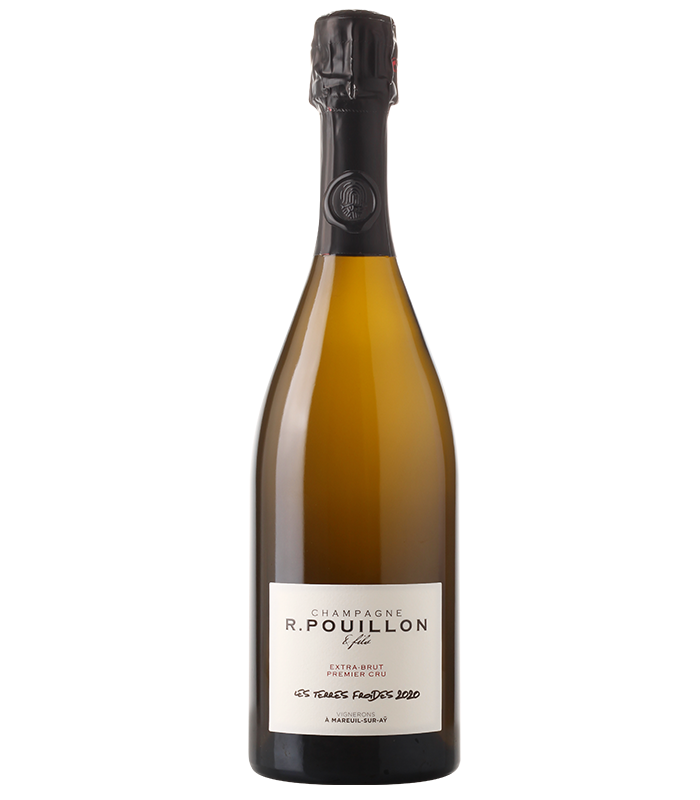
R. Pouillon Les Terres Froides Premier Cru Extra Brut 2020

 In stock
 Choose delivery to a Seewines store and get an extra 5% off!
- Seewines Бизнес Парк - Младост 4, сграда 11, вх.В, ет.1, София
- Seewines Лозенец - ул. "Златен рог", 20, София
- Seewines Пловдив - ул. "Княз Александър I", 45, Пловдив
 Free shipping on orders over 60 € / 117.35 BGN
- Seewines courier to an address within Sofia
- To Speedy offices nationwide
 Surprise with style
Add a luxury gift wrapping and a personalized card with your wish. Select this option in the next step of the order.

Детайли
100% Chardonnay from a parcel with over 40-year-old vines and northern exposure, which underscores the chalky subsoil’s character and produces a wine with a special kind of expression, brought about by crispness and salinity. On tasting, Les Terres Froides gradually reveals itself. Its aromas of white fruit and delicate flowers blossom after a few moments in the glass. The attack is smooth and fresh, underpinned by lively acidity that flows elegantly through the palate. The barrel ageing is perfectly integrated, prolonging the finish with creamy, saline notes, creating an airy yet persistent mouthfeel. This champagne possesses remarkable length, inviting slow tasting to better appreciate its nuances and complexity.

Variety
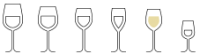
Glass
Flavours
-

-

-

-

Food pairing
-

-

-

More about this product
R. Pouillon & Fils
The Pouillon family has been growing grapes in the region for over a century, but it wasn’t until 1947 when Fabrice’s grandfather, Roger Pouillon, decided to produce wine from his holdings along with the help of his wife, Bernedette, and his uncle, Louis Baulant, a well-known winemaker and consultant in the region. The estate continued to grow over succeeding decades as grape contracts expired allowing the family terroirs to be reincorporated into the Pouillon estate. James Pouillon, Fabrice’s father, joined the firm in 1964 and modernized the cellar by adding enamel-lined tanks and gyropalletes. Fabrice joined his father in 1998 after finishing degrees in both business and oenology school, and he has taken the winery in an exciting new direction. Fabrice is also known for his innovative “Méthode Fabrice Pouillon,” which involves producing Champagne without the addition of external sugars. Traditionally, sugar can be added during three stages of Champagne production: chaptalization, prise de mousse, and dosage. Fabrice’s method relies solely on the natural sugars present in the grapes, resulting in a purer expression of the fruit and terroir.
All wines of the same producer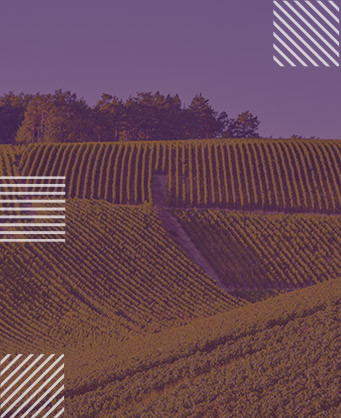
Champagne
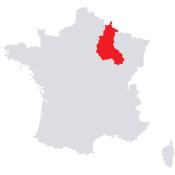
The Champagne region is located to the northernmost of all the vineyards of France. The distinctive taste and purity of real champagne is certainly due to the calcareous soil and continental growing conditions. Unlike most other wines, it is characteristic of those from Champagne that the vintages of different years are blended to obtain a final product (non-vintage) or different wines from the same vintage are blended - in this case the wine is marked as vintage and its year is indicated on the label. This means, after all, that the quality of the champagne obtained depends very much on the balance between the quality of the grapes and the skills of the oenologists, which is why they are also promoted according to the name of the producer. Thus, in Champagne and around the world, the most famous names are Krug, Mumm, Bollinger, Veuve Clicquot, not to mention the well-known brands Dom Perignon, Moët & Chandon and Taittinger. The grape varieties in this region are Chardonnay, Pinot Noir and Pinot Meunier, which are present in different proportions in Champagne wines. The so-called Blanc de Blanc, made only from Chardonnay grapes, and Blanc de Noir, which is white champagne but made from red Pinot Noir grapes, are also often produced. A curious and little known fact is that in Champagne sparkling rose is made with a mixture of white and red wine, and not as is the standard for the production of rose wine.
More wines of this region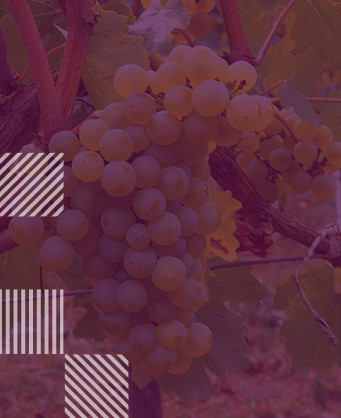
Chardonnay
Chardonnay is the world's most famous white-wine grape and also one of the most widely planted. Of course, the most highly regarded expressions of the variety are those from Burgundy and California, but many high-quality examples are made in Italy, Australia, New Zealand and parts of South America. Describing the flavours of Chardonnay is not easy. This is not thanks to the complexity of the varietal itself but usually due its susceptibility to winemaking techniques - such as Malolactic fermentation which gives distinctive buttery aromas or Fermentation or maturation in oak barrels which contributes to the wine with smokey notes of vanilla, honey and even cinnamon, and not last the lees contact while in barrel imparts biscuity, doughy flavours. And all these incorporated with the varietal aromas of tropical (banana, pineapple and guava) to stone fruits (peach, nectarine and apricot), sometimes even citrus and apple notes. Climate plays a major role in dictating which fruit flavours a Chardonnay will have - warm regions (California, Australia ) make more tropical styles; temperate zones (southern Burgundy, New Zealand) - stone fruit notes, while the very coolest (Chablis, Champagne) lean towards green-apple aromas.
More wines of the same variety
Отзиви и оценки
Be the first to review