 Physical stores
 Free shipping on orders over

 Филтри
 Login
Login








 Назад
Назад

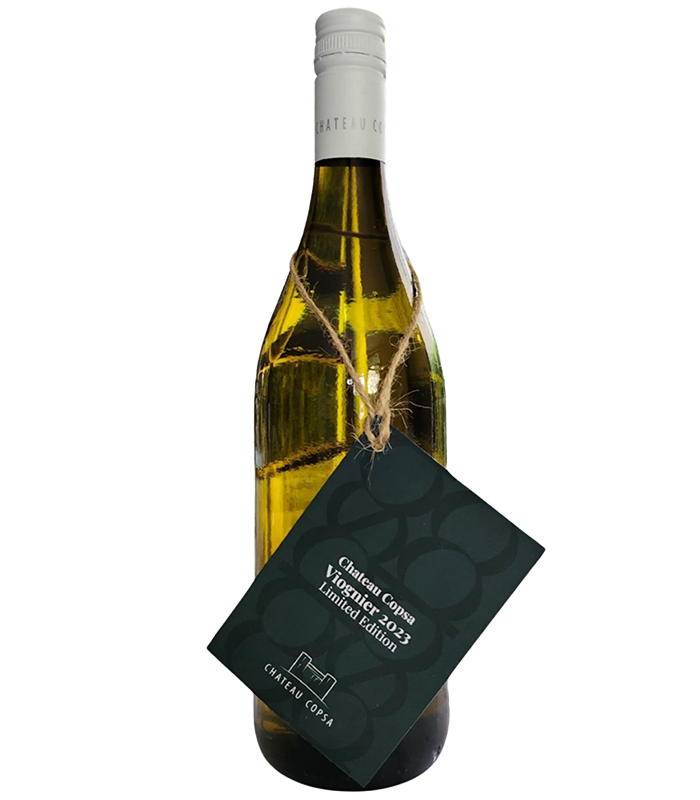
Viognier Chateau Copsa 2023

 In stock
 Choose delivery to a Seewines store and get an extra 5% off!
- Seewines Бизнес Парк - Младост 4, сграда 11, вх.В, ет.1, София
- Seewines Лозенец - ул. "Златен рог", 20, София
- Seewines Пловдив - ул. "Княз Александър I", 45, Пловдив
 Free shipping on orders over 60 € / 117.35 BGN
- Seewines courier to an address within Sofia
- To Speedy offices nationwide
 Surprise with style
Add a luxury gift wrapping and a personalized card with your wish. Select this option in the next step of the order.

Детайли
With its pale golden color and rich aroma of apricots, peaches, and delicate floral notes, this wine captivates from the very first sip. The taste is balanced, with a creamy texture and fresh citrus accents, complemented by a long and elegant finish. Ideal for pairing with creamy dishes, seafood, and soft cheeses, Vionie is a wonderful example of the potential of the Thracian Plain.
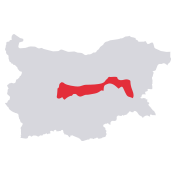
Region

Profile
-
Fruit
-
Body
-
Dryness
-
Freshness
-
Alcohol
Variety
Glass

Flavours
-

-

-

Food pairing
-

-

-

More about this product
Copsa
Chateau Kopsa is located in the heart of the Rose Valley in the lands of the Thracians and bears the ancient name of Karlovo. Chateau Copsa is one of the few family wineries where the whole process is undertaken - from the grapes to the bottle. Thus, the producers personally monitor every moment of the wine's development and make sure that it lives and reveals even more interesting and deep notes of its character, even enclosed in glass. Chateau Kopsa's own vineyards are 50 hectares - in one of the unique terroirs of Bulgaria - tucked between the southern slope of Stara Planina and Sredna Gora, among aromas of rose groves and lavender fields. The place is extremely favorable for the cultivation of high quality white varieties - the emblematic local variety is Red Muscat, but Muscat Otonel, Chardonnay, Sauvignon Blanc, as well as red - Cabernet Sauvignon and Merlot are also grown.
All wines of the same producer
Rose Valley
The name of the region suggests the main common plants here - indeed it is best known for growing roses and producing rose oil. It is located at the foot of Stara Planina and stretches between it and Sredna Gora, including the Sungurlar Valley, which became famous in Europe before the WWII with its white wine from the local Sungurlare misket grape variety. This variety is actually spread throughout the valley - its full name is Red Misket and it is actually made into a white dry wine, which is characterised by a rich fruity aroma, elegant body and a delicate, memorable aftertaste. It is considered to be an old local variety, cultivated nowadays mainly in the Sungurlare Valley, and the Karlovo and Brezovo districts. In addition to this variety, there are plantations of Riesling, Rkatsiteli, Cabernet Sauvignon and Merlot, which also produce wines with a pleasant fruity aroma, fresh and harmonious taste.
More wines of this region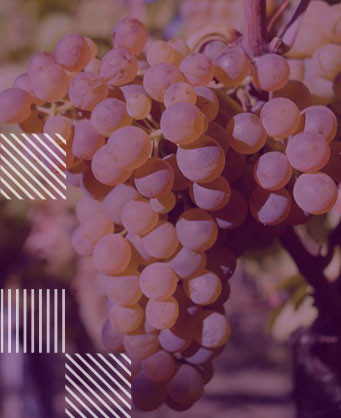
Viognier
Viognier is a white grape variety used to produce rich wines with pronounced aromas of stone fruit, but can also be very herbal, with aromas of chamomile, lavender, thyme and even a hint of pine. At the end of the 1960s, the Viognier plantations numbered only 14 hectares - mainly located around Condrieu and Château-Grillet. The variety is difficult to grow, has a naturally low acidity. At the same time, it requires a lot of sunshine to ripen properly, but if there is too much heat, it accumulates sugars quickly and due to the high alcohol content, the final wine loses the apricot tones in its aromatic profile. Despite these difficulties in cultivation, after the late 70s of last century, various winemakers around the world began to experiment with it - mailny in Australia and the United States. Today, Viognier is enjoying a remarkable renaissance, with even increasing areas in France, and is also grown in Italy, Spain, Switzerland, the United States, Chile, Argentina, South Africa, Australia, New Zealand and even Japan. The variety performs quite well when fermented in oak barrels, in which case the herbal aromas are softened and shades of honey and vanilla are added to them. Interestingly, Vionnier is allowed and used in the Côte-Rôtie appellation for co-fermentation with Syrah. The allowed addition is up to 20% and actually it contributes significantly to improving the profile of the final wine.
More wines of the same variety

Отзиви и оценки
Be the first to review