 Physical stores
 Free shipping on orders over

 Филтри
 Login
Login








 Назад
Назад

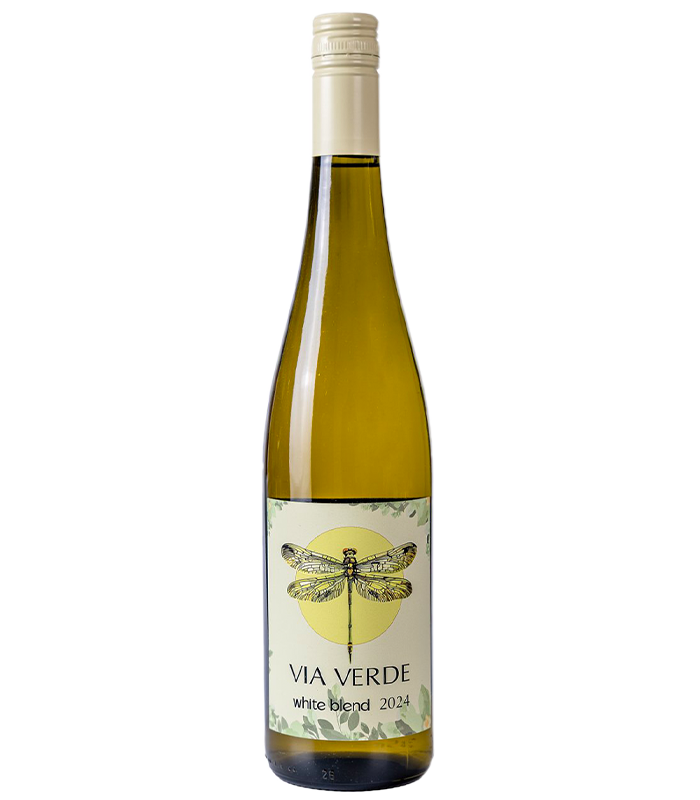
White Blend Via Verde 2024

 In stock
 Choose delivery to a Seewines store and get an extra 5% off!
- Seewines Бизнес Парк - Младост 4, сграда 11, вх.В, ет.1, София
- Seewines Лозенец - ул. "Златен рог", 20, София
- Seewines Пловдив - ул. "Княз Александър I", 45, Пловдив
 Free shipping on orders over 60 € / 117.35 BGN
- Seewines courier to an address within Sofia
- To Speedy offices nationwide
 Surprise with style
Add a luxury gift wrapping and a personalized card with your wish. Select this option in the next step of the order.

Детайли
Pale golden color. The nose is explosive and distinctly floral. The palate is fresh, juicy, and intense, revealing an appetizing flavor of yellow fruits, complemented by elegant hints of acacia.
Region


Profile
-
Fruit
-
Body
-
Dryness
-
Freshness
-
Alcohol



More about this product

Via Verde
Via Verde from the Latin "green road" began as a family project in late 2013. with the search for the best place to start a vineyard. They found their first vineyard in the village of Levunovo with 80 decares, which enjoys a wonderful terroir, and the property grows to 200 decares on the sunny hills near the town of Sandanski. The vines are young 8-13 years old from classic varieties such as Merlot, Cabernet Sauvignon, Cabernet Franc, Syrah, Muscat Otonel, as well as the emblematic for the region Sandanski Muscat, Early Melnik vine and Keratsuda. The wines of Via Verde can be recognized by three features - elegance, harmony and intriguing character. An important step in the development of Via Verde is ahead with the construction of its own wine cellar near the vineyards.
All wines of the same producer
Struma Valley
The Struma Valley region covers the Southwestern part of Bulgaria and the Bulgarian part of Macedonia. The climate of the region is specific and is highly influenced by the warm currents from the Mediterranean Sea. The main grape varieties here are the local endemic Shiroka Melnishka vine, Melnik 55 (cross between Shiroka Melnishka vine and the French variety Valdigie), but also the international varieties Cabernet Sauvignon, Merlot, Syrah and others. Due to the dryer climate and the higher temperatures, the wines develop warm southern tones in the aroma, with nuances of ripe fruit and a densely rich body. Of particular interest are the wines from Shiroka Melnik vine, partly due to the fact that the variety is difficult to grow because it ripens in late autumn. Today, the region is the most dynamically developing in Bulgaria, with many new, small, family owned wineries, increasingly focused on the quality and terroir expression of the wines they produce.
More wines of this region
Assyrtiko
Assyrtiko (Assyrtico or Asyrtiko) is probably the most emblematic wine grape variety in Greece. It originates and is best grown on the volcanic island of Santorini in the Aegean Sea. The variety is quite versatile and its wines can be found in many styles, from fresh and mineral white wines to rich, nut-dessert, known as Vinsanto. On the island of Santorini there are up to 70-year-old vines, and, of course, this age affects the quality of wine - yields decrease and the concentration of aromas in the fruit gives the potential for production of complex and rich wines. The volcanic soils of the vineyards on the island do not allow the spread of phylloxera and here the vines do not need to be grafted on rootstocks. The harsh climatic conditions of the island - strong winds and hot sun - determine the unconventional form of growing Assyrtico - in "baskets" whose walls are made of plant stems and leaves, thus providing shelter for the fruit and protecting them from strong winds. Limited water resources in the soil force growers to plant the vines farther apart than generally accepted standards. Assirtiko is an oxidation-resistant variety used by Santorini winemakers in the production of Vinsanto sweet wines. By controlling the level of oxidation, darker wines with the characteristics of fig, coffee, kirsch and chocolate can be obtained. In the form of dry white wine, Assirtiko has a yellow-golden color with aromas of pear, apple and citrus, as well as fine minerality in the aftertaste. Naturally high acidity means that Assyrtico wines can be aged for many years.
More wines of the same variety
Отзиви и оценки
Be the first to review