 Physical stores
 Free shipping on orders over

 Филтри
 Login
Login








 Назад
Назад

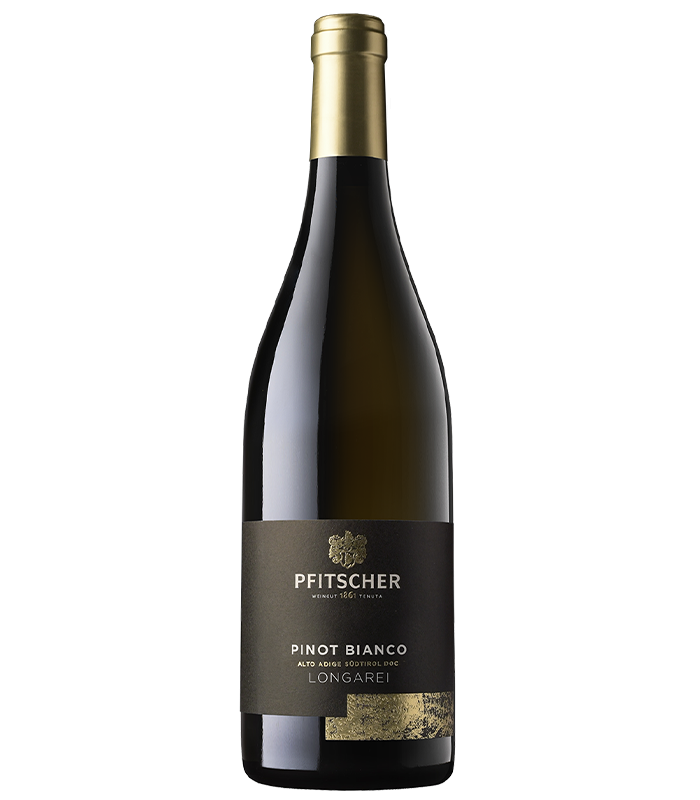
Pinot Bianco Longarei Pfitscher 2024

 In stock
 Choose delivery to a Seewines store and get an extra 5% off!
- Seewines Бизнес Парк - Младост 4, сграда 11, вх.В, ет.1, София
- Seewines Лозенец - ул. "Златен рог", 20, София
- Seewines Пловдив - ул. "Княз Александър I", 45, Пловдив
 Free shipping on orders over 60 € / 117.35 BGN
- Seewines courier to an address within Sofia
- To Speedy offices nationwide
 Surprise with style
Add a luxury gift wrapping and a personalized card with your wish. Select this option in the next step of the order.

Детайли
A very fresh and fruity white wine with a delicate greenish-yellow color, unfolding fine fruit accents of yellow apples. This Pinot Bianco is finely structured and balanced on the palate, with a strong, elegant body.
Region

Profile
-
Fruit
-
Body
-
Dryness
-
Freshness
-
Alcohol



More about this product
Pfitscher
The name Pfitscher has always been synonymous with a passion for making great wines. The Pfitschers have been making wine since 1861. That’s over 150 years, during which both their wine and their philosophy have undergone major development. In the past, wine had to meet a different set of requirements to today. Klaus Pfitscher understood this as far back as 40 years ago, which is why he decided to focus on making more challenging wines and producing the highest possible quality. At the time, this concept was not very widespread amongst the winemakers of South Tyrol. But how right he was. Today, their wines still represent the sheer power of the grapes. They are wines with the hallmark of authenticity and sincerity.
All wines of the same producer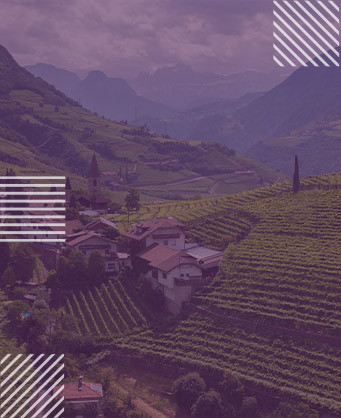
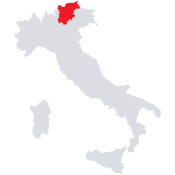
Alto-Adige
Alto Adige (or Sudtirol for German-speaking two-thirds of its inhabitants) is located in northern Italy and borders Veneto to the east, Lombardy to the west and the Tyrol region of Austria to the north. Stretching to 47 degrees north latitude and altitude over 3050 meters, Alto Adige is a region with topographic and climatic extremes. The main wine-growing areas in the region follow the Adige river valley from Merano in the north to Trentino in the south and are planted both at the bottom of the valley and on its slopes, many of which are incredibly steep. Most wines from this region are produced by cooperatives which, due to the need for efficiency in harvesting, wine production and trade, have become known for their constant quality and reliable quantity. Nowadays, there is a tendency to increase the number of independent producers, which also gain a good reputation. The dominant local varieties are the red Schiava and Lagrein, the most common being Schiava (Vernatsch in German), which makes wine with a medium body, low alcohol and tannin levels and is often mixed with the denser Lagrein to give more depth and power of wine. The white varieties used in Alto Adige are the traditional German Muller-Thurgau, Sylvaner and Gewurztraminer, as well as the French Chardonnay, Sauvignon Blanc, Pinot Bianco and Pinot Grigio. The Pinot Noir plantations have recently increased as well.
More wines of this region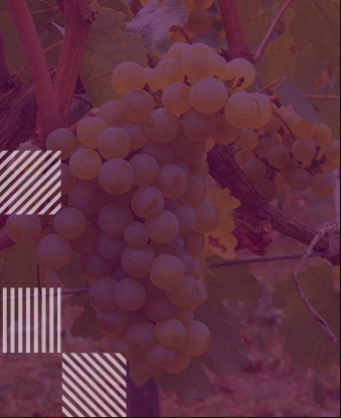
Pinot Blanc
Пино Бианко е италианското наименование на френския сорт Пино Блан, който произхожда от Бургундия и е широко разпространен в световен мащаб. Пино Бианко изглежда е мутация на Пино Гриджо, който от своя страна е мутация на Пино Ноар. Пино Блан се е разпространил широко във всички европейски страни с хладен или студен климат поради много по-добрите си енологични качества от своя прародител Пино Гриджо. Дълго време той е бил бъркан с Шардоне, но днес тези съмнения са окончателно разсеяни. Днес, малко използван в Бургундия, благодарение на устойчивостта си на студен климат, той е намерил своя втори дом в Елзас, където се отглежда заедно с големите благородници на региона. В световен мащаб Пино Блан се отглежда в много райони - от Германия до Австрия, Източна Европа и Калифорния. В останалата част на света обаче, освен в Италия, този сорт грозде не се радва на истински успех, отново поради предпочитанията на енолозите към Шардоне. От друга страна, Пино Бианко е много успешен в Северна Италия, където се представя добре, въпреки че тук отглеждането му е по-широко разпространено, но много по-малко от това на неговия предшественик Пино Гриджо. Пино Бианко е част от купажа на пенливото вино Franciacorta заедно с Шардоне и Пино Ноар. Пино Бианко се отглежда особено добре в Алто Адидже, Трентино, Фриули и Венето. В Италия той е внесен за първи път в Пиемонт, където обаче отглеждането му скоро е изоставено. Въпреки че не е дълготрайно и с голяма интензивност, виното, произведено от този сорт има добра структура и тяло. Често се използва в купажи, за да придаде плътност и структура, също така понася добре ферментацията в дървени бъчви, в резултат на което се получава вино, което придобива различен за окото цвят в зависимост от вида на използваната винификация. Това винаги са много светли нюанси, които варират от сламеножълто до жълто със зеленикави оттенъци. Пино Блан се разпознава по плодовите и цветни аромати на слива, банан, ананас и лимон, съчетани с жасмин, акация и глог.
More wines of the same variety
Отзиви и оценки
Be the first to review